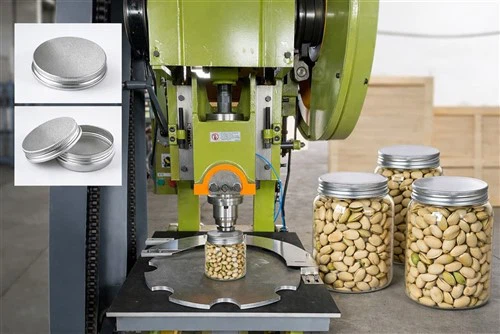
As a supplier of Customized Metal Cap Production Line, I've witnessed firsthand the intricate dance of machinery and processes that go into ensuring the seamless operation of a production line. In this blog post, I'll delve into the key factors that contribute to the smoothness of a customized metal cap production process.

1. Precise Design and Engineering
The foundation of a smooth - running metal cap production line lies in its design and engineering. Every component of the line, from the coil feeding system to the final cap inspection unit, needs to be carefully designed to work in harmony.
- Modular Design: A modular design approach allows for flexibility and easy maintenance. Each module can be independently serviced or upgraded without disrupting the entire production line. For example, if the printing module needs to be updated to incorporate new branding requirements, it can be done so without affecting the cap - forming or sealing modules.
- Simulation and Testing: Before the production line is assembled, advanced simulation software is used to model the entire manufacturing process. This helps identify potential bottlenecks, mechanical interferences, and operational inefficiencies. Physical prototypes and small - scale test runs are also conducted to validate the design and make any necessary adjustments.
2. High - Quality Equipment and Components
The quality of the equipment and components used in the production line directly impacts its smooth operation.
- Robust Machinery: Investing in high - quality machinery is non - negotiable. For instance, the stamping presses used to form the metal caps should be able to withstand high pressures and operate at high speeds without significant wear and tear. These presses are often equipped with advanced control systems that ensure precise stamping force and accurate cap dimensions.
- Reliable Sensors and Actuators: Sensors play a crucial role in monitoring the production process. They detect the presence of caps, measure dimensions, and check for defects. Actuators are responsible for controlling the movement of components, such as conveyor belts and robotic arms. Using reliable sensors and actuators reduces the risk of downtime due to malfunctions.
3. Skilled Workforce and Training
Even the most advanced production line requires a skilled workforce to operate it smoothly.
- Training Programs: We offer comprehensive training programs for operators and maintenance staff. These programs cover everything from basic machine operation to advanced troubleshooting techniques. Regular refresher courses are also provided to keep the workforce updated on the latest technological advancements and best practices.
- Operator Knowledge: Operators need to have a deep understanding of the production process and the equipment they are using. They should be able to quickly identify and resolve minor issues before they escalate into major problems. For example, an experienced operator can detect abnormal vibrations in a machine, which may indicate a loose or worn - out component.
4. Effective Quality Control Measures
Quality control is an integral part of ensuring the smoothness of the production process.
- In - line Inspection: In - line inspection systems are installed at various stages of the production line to check the quality of the metal caps. These systems use cameras, sensors, and other advanced technologies to detect defects such as scratches, dents, and incorrect dimensions. Defective caps are automatically removed from the production line, preventing them from reaching the next stage of production.
- Final Inspection: A thorough final inspection is conducted before the metal caps are packaged and shipped. This includes a visual inspection as well as additional quality checks to ensure that the caps meet all the specified requirements.
5. Maintenance and Continuous Improvement
Regular maintenance and continuous improvement are essential for keeping the production line running smoothly over the long term.
- Preventive Maintenance: A preventive maintenance schedule is established to ensure that all equipment is regularly serviced and inspected. This includes tasks such as lubrication, filter replacement, and calibration of sensors. By identifying and addressing potential issues before they cause breakdowns, preventive maintenance minimizes downtime and extends the lifespan of the equipment.
- Feedback Loop: A feedback loop is established between the production floor, the quality control department, and the engineering team. Feedback from operators and quality control personnel is used to identify areas for improvement in the production process. This could involve making adjustments to the machinery, modifying the production parameters, or implementing new quality control measures.
6. Supply Chain Management
A well - managed supply chain is crucial for the uninterrupted operation of the production line.
- Reliable Suppliers: We work with a network of reliable suppliers to ensure a steady supply of raw materials, such as metal coils and printing inks. These suppliers are carefully selected based on their quality, reliability, and ability to meet our production requirements.
- Inventory Management: Effective inventory management is essential to avoid shortages or overstocking of raw materials. Just - in - time inventory systems are often used to minimize inventory holding costs while ensuring that there are enough materials available to keep the production line running.
7. Automation and Integration
Automation and integration technologies play a significant role in streamlining the production process.
- Automated Conveyor Systems: Automated conveyor systems are used to transport the metal caps between different stages of the production line. These systems can be programmed to adjust their speed and direction based on the production requirements, reducing the need for manual handling and improving efficiency.
- Integration of Systems: All the components of the production line, including the stamping presses, printing machines, and inspection systems, are integrated into a single control system. This allows for centralized monitoring and control of the entire production process, making it easier to identify and resolve issues quickly.
In conclusion, a customized metal cap production line can ensure the smoothness of the production process through precise design and engineering, high - quality equipment, a skilled workforce, effective quality control measures, regular maintenance, efficient supply chain management, and the use of automation and integration technologies. If you are in the market for a customized metal cap production line, we are here to provide you with the best solutions tailored to your specific needs. Contact us to start a discussion about your requirements and explore how our production lines can help you achieve seamless and efficient metal cap manufacturing.
References
- "Handbook of Metal Forming" by G. E. Dieter
- "Automation, Production Systems, and Computer - Integrated Manufacturing" by Mikell P. Groover
- Industry - specific research papers on metal cap manufacturing processes